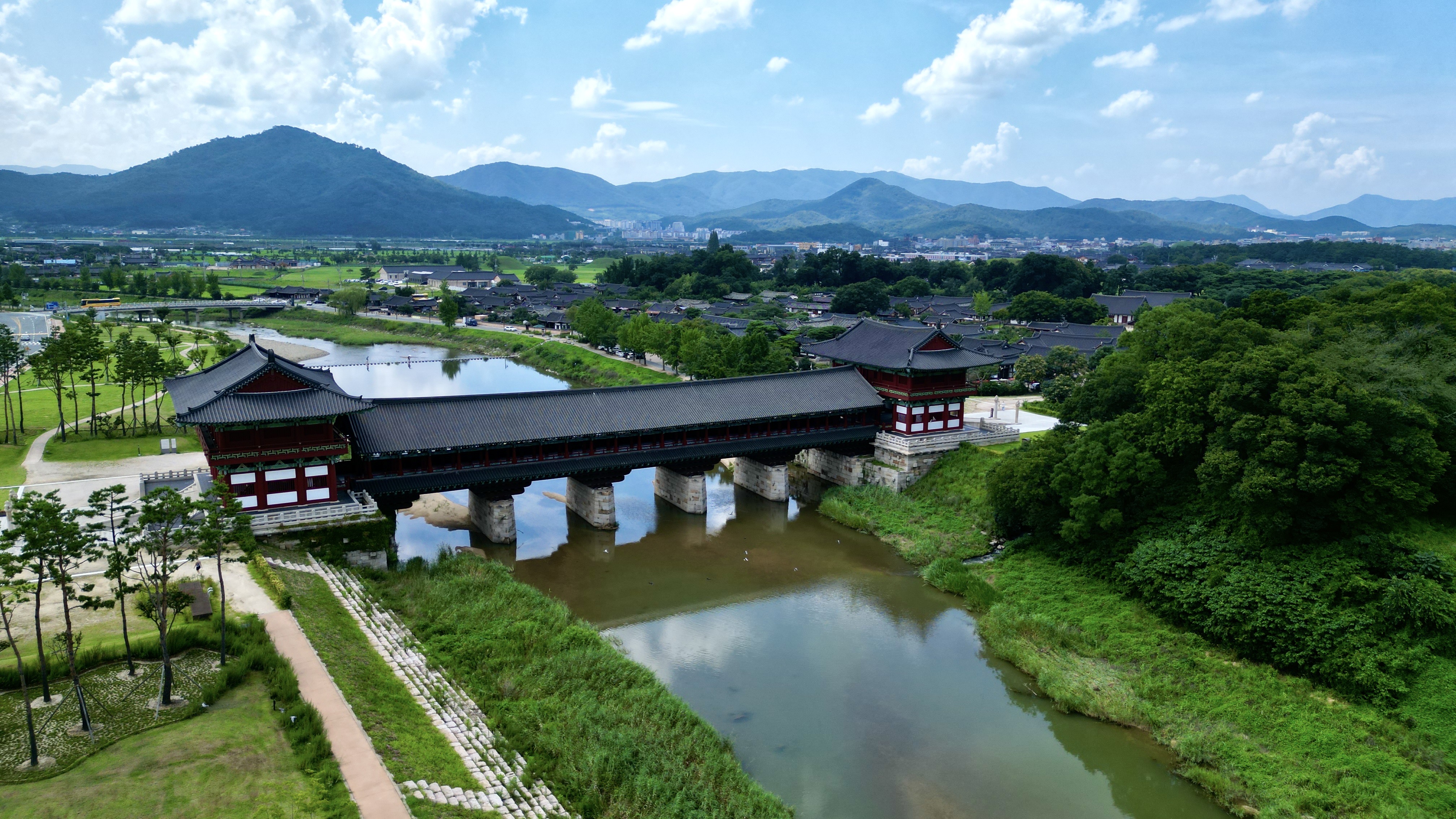
Gyeongju, a true gem in South Korea, is like stepping into a historical fairy tale. Located in the southeast part of the country, not far from Busan, it’s a city that inspires an air of tranquility and charm. What sets it apart? Well, it’s like a journey back in time.
Walking through the streets of Gyeongju feels like a step into the past, where time slows down and history comes to life. Surrounded by ancient relics and stunning architecture, you can’t help but to feel a sense of wonder.

It’s a place where you can escape the hustle and bustle of modern life and immerse yourself in the rich culture and heritage of Korea. From the serene temples to the lush parks and gardens, every corner of Gyeongju tells a story.
So, if you’re looking for a truly unforgettable experience, Gyeongju is the place to go. It’s a journey through history that will leave you breathless and longing for more.

Glimpse into South Korea’s history
Gyeongju, the former capital of the ancient Silla Dynasty, the Silla dynasty governed the Korean peninsula for nearly a millennium, from 57 BC to 935 AD, and Gyeongju remains a testament to many of the cultural accomplishments of that era. During this period, Silla thrived as a prosperous nation, with its capital Gyeongju ranking as the fourth largest city in the world… Yeah we know is a very interesting fact. Serving as the seat of the Silla court and the residence of much of the kingdom’s elite, Gyeongju today still bears traces of their opulent lifestyle and legacy in the city’s architecture and historical sites.

With the rise of the Joseon dynasty from 1392 to 1910, Gyeongju lost its status as a national capital. Throughout its history, the city endured multiple assaults from foreign forces. Gyeongju also became a battleground during the Japanese invasions of Korea, witnessing some of the bloodiest conflicts of that period.
Since the early 2000s, Gyeongju has been considered a UNESCO World Heritage site for holding so many outstanding examples of Korean culture like pagodas, Buddhist artifacts, and temples from the Silla dynasty.

Today, Gyeongju is often called “the museum without walls” and stands as one of South Korea’s premier tourist destinations. It holds particular attraction for travellers keen on exploring the cultural legacy of the Silla dynasty and the architectural marvels of the Joseon dynasty. With its rich history and abundance of historical sites, Gyeongju offers visitors a unique opportunity to immerse themselves in Korea’s ancient past and experience its enduring cultural heritage firsthand.
How To Get To Gyeongju
If you’re planning a trip from Busan to Gyeongju, you have two transportation options at your disposal. The first involves catching a local train from Bujeon Station in Busan, which will take you directly to Gyeongju train station. The journey typically lasts around 2 hours, and the cost of a train ticket is approximately 6600 won, equivalent to about $5.50.
To buy your ticket, head to Bujeon Station about 20 minutes before your departure time and buy your ticket directly at the station.

An alternative and faster option is to hop aboard the KTX (high-speed train) from Busan Station to Singyeongju Station. This swift ride takes you to your destination in just over half an hour, with tickets priced at approximately 11000 won, roughly equivalent to $9, for economy class.
If you’re traveling from Seoul to Gyeongju as we did, the quickest route is to catch the KTX to Singyeongju. This high-speed journey takes approximately 2 hours and costs 49000 won (around $40) for economy class. We took the bus straight from the airport in Seoul it took us 3.5 hours and cost 43000 won per person, the buses in Korea are very efficient and comfortable.
However, if you’re coming from Busan, I’d suggest taking the local train instead. Not only does it provide a direct route to your destination, but it also offers the chance to soak in the breathtaking landscapes between Busan and Gyeongju. It’s a scenic ride that’s not to be missed!
Important note to foreigners: If you are traveling to South Korea, be aware that you might not be able to use your debit or credit card to buy anything online including tickets for the train or bus as online purchases can only be made with cards issued in South Korea. So we recommend visiting the bus or train station at least one day before to buy your ticket, especially if it is a weekend or high season.

Where To Stay In Gyeongju
We stayed at Stay Romantic Trip Hotel (translation name from Google), the hotel is well located just a few minutes walk from the major attractions in town, the room was spacious and comfortable, and also a small breakfast was included in the price.


Looking for a Travel Insurance?
We recommend using Genki. They are very practical, affordable, reliable, and best of all no commitment, you can pay monthly and cancel it anytime. It is also very easy to process claims with them, we have use it during our trip and we got our claim approved and fully refunded within weeks. Check on their website how much you will pay.
Things to do in Gyeongju
We loved visiting Gyeongju. To enjoy this city, keep in mind two days should be enough to visit everything located near the city. But if you have an extra day in your itinerary in South Korea will recommend using it in this beautiful city and explore the area. Here are our favourite things to do in Gyeongju:
The Royal Tombs of Daereungwon Park
As you explore Gyeongju, you’ll come across these impressive hills with slightly peculiar shapes. Can you guess what they are? Well, surprise! They’re actually ancient tombs known as “tumuli”!
During the reign of the Kingdom of Silla (from 57 BC until 935 AD), high-ranking individuals were laid to rest in these tombs. Wooden chambers, about 2 meters high, were used to house their remains. These chambers were then covered with stones and soil, gradually forming the distinct mound shape that we see today.

Interestingly, the size of the tomb often reflected the rank of the individual. So, the higher the person’s status, the larger the tomb. It’s a fascinating glimpse into the burial customs and social hierarchy of ancient Korea!
It is at Daereungwon Park that you will see the largest number of tombs, some of which contain the bodies of ancient kings of Silla. In addition to the historical aspect of this attraction, the park is beautiful so make sure to stop by and take a look!
Cheonmachong Tomb is the only tomb open to go inside. It was excavated in 1973 which unearthed many artefacts that are now on display inside the tomb and cost 3,000 won to enter ($2.25).

It is a beautiful park to walk around located in the middle of the city, but make sure to stay on the path and do not walk over the tombs as it could lead to 20,000,000 won fine or 2 years in jail.


The Cheomseongdae Observatory
Cheomseongdae Observatory is undoubtedly one of the most iconic landmarks in Gyeongju. Is actually an astronomical observatory—and not just any observatory! It holds the prestigious title of being the very first astronomical observatory in East Asia. The name Cheomseongdae itself translates to “the tower from which we observe the stars” in Korean.

If you travel to Gyeongju during the spring, there are beautiful flower fields in the park next to the observatory.
This site also opens its doors at night, offering a completely different experience. If you have the chance, I highly recommend revisiting it during the evening. The nighttime ambiance adds a unique charm, and it’s a fantastic opportunity to gaze at the stars, just as Korean scientists did centuries ago. It’s a captivating journey through time and space that you won’t want to miss!


The Hanok Village
Traditional Korean houses are renowned for their environmentally friendly design. Constructed using raw materials like soil, timber, and rock, these homes are crafted in a manner that minimizes pollution and fosters harmony with the natural environment. It’s a testament to Korea’s traditional architectural wisdom, showcasing a deep respect for nature and sustainable living practices.
Not far away from the observatory, you will find the Hanok village is a place where you get lost in time as the architecture is very traditional, there are also cafes and restaurants to grab a snack.

The Woljeonggyo Bridge
Just a short stroll from the traditional Gyeongju district awaits the stunning Woljeonggyo Bridge, gracefully spanning the Namcheon River. It’s a scenic spot that’s well worth a visit during your time in Gyeongju.


Donggung Palace and Wolji Pond
Another must-see gem in Gyeongju is the Donggung Palace, a captivating complex of wooden structures encircling the picturesque Wolji Pond. Originally commissioned by King Munmu, construction of the palace was completed in 674 AD. Over time, the palace suffered damage, but underwent extensive renovations in 1974 to restore its former grandeur. Today, visitors can wander through this historic site, marveling at its ancient beauty and imagining the regal splendor of days gone by.

Much like the other attractions I’ve mentioned, Donggung Palace is also open to visitors at night, and let me tell you, it’s a sight to behold! As darkness descends, the palace transforms into a magical wonderland with the help of twinkling lights. It’s one of the things that truly captivated me about Gyeongju.
The city takes on a whole new vibe as evening sets in, offering a completely different experience from the daytime. Revisiting places you’ve already explored during the day becomes a whole new adventure under the cloak of night. It’s like discovering Gyeongju all over again, each time with a fresh perspective and a touch of


Gyeongju Gyerim Forest
Gyerim Forest, nestled between the Cheomseongdae Observatory and Wolseong Fortress, is a lush expanse dominated by ancient zelkova and willow trees. These majestic specimens thrive on gently sloping hills and line a small stream that meanders through the northwest part of the woods.
According to the legend, the forest is said to be the birth place of the founder of the Gyeongju Kim clan. It is said that King Talhae heard a rooster crying from deep inside the woods underneath a tree on which hung a golden box. The king opened the box and found a small child inside, Kim Al-ji who he raised as his own.

Where to eat in Gyeongju
Well, South Korea is also well known for its cuisine, and Gyeongju is not the exception. We are going to share with you some of the places we tried and really impressed us with some of the traditional dishes:
Daehwa Mandu
If you are looking for traditional Korean cuisine don’t miss out this place is located in the heart of the city center, here we tried a popular dish called Tteokbokki, is made with Korean rice cakes, kelp/anchovy broth, gochujang, and Korean fish cakes which gives it an authentic taste JUST like how they sell it on the streets!


Hotteok
This food stall is located also in the city center on the opposite side of the restaurant mentioned before, here we tried the famous Hotteok, which is a flour dough pancake filled with sugar syrup inside or in this case different kinds of fillings. It’s one of the most popular street snacks in Korea.


Restaurant Tigerkatsu
This is one of our favourite places to eat in South Korea, this little restaurant is located behind the main street and is literally a little hidden gem, the specialty is of course katsu but not only chicken but also striploin and sirloin katsu, make sure to not order lots of dishes the picture in the screen at the time to order can fool you (massive portions lol).


It can be a bit tricky to navigate in South Korea as a visitor with Google Maps not being fully operational. We recommend downloading Naver Maps. It is unfortunately not available in English, but to help you find the places mentioned in this blog, we have marked them on Naver Maps.
Conclusion
We hope this guide helps you plan your trip to Gyeongju – our favourite city in Korea! It’s a perfect stop if you’re visiting Busan, with plenty of beautiful and historical sights to see. If you’re interested in learning more about South Korea’s ancient history – or just want a break from the busy cities – you might want to stay for more than a day.
For other travel tips of South Korea, check out our blog about 2 weeks itinerary for South Korea.
Leave a Reply