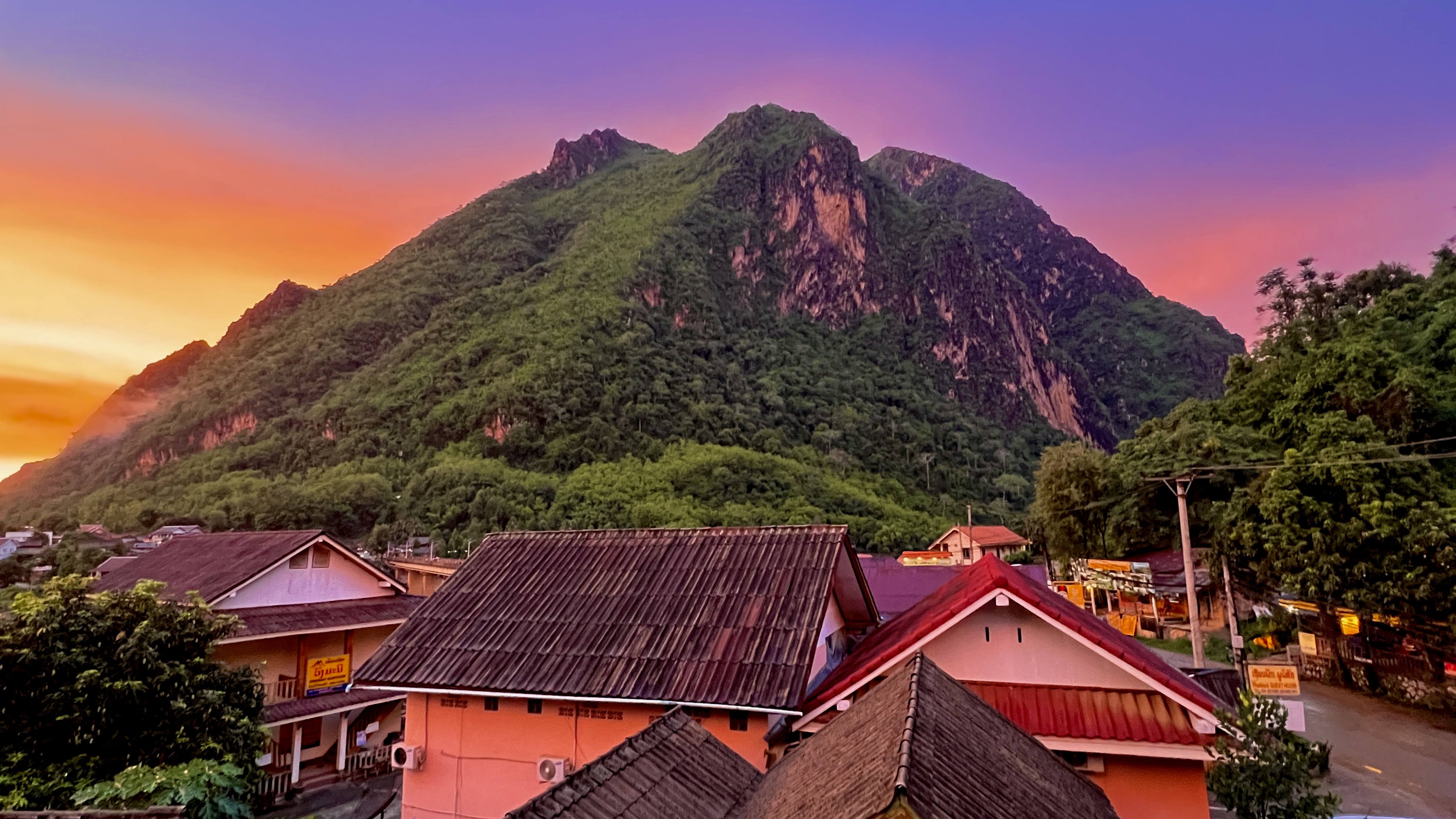
An isolated town called Nong Khiaw may be found in Northern Laos, where China and Vietnam share the country’s border. Although the majority of visitors believe Luang Prabang to be Southeast Asia’s last remaining wildness, We recommend you venture even farther into the historic tribal villages of Laos and prepare to be pleasantly surprised!
Nong Khiaw, renowned for its stunning landscapes and the gentle flow of the Nam Ou River, offers a tranquil village retreat experience. Visitors can enjoy several nights in this idyllic setting, embark on riverboat excursions, discover neighbouring Laos villages, and partake in immersive forest treks. It’s essential to bear in mind the area’s historical context, as remnants of the Vietnam War are still present, underscoring the shared history of Laos during that tumultuous period.

Nong Khiaw – Northern Laos’ Hidden Gem
Nong Khiaw remains a well-kept secret, often overlooked by the average tourist. This small town unveils itself as one of Laos’ concealed treasures. Nong Khiaw, a calm and picturesque town, overflows with opportunities for adventure. Nong Khiaw is what you imagine backpacking in Southeast Asia to have been like in the past.
How to get to Nong Khiaw
Take a van from Luang Prabang, tickets cost 180.000 kip (10$ per person) and the trip takes 3 to 4 hours. I recommend arranging for the ticket at your hotel the day before or earlier since seats are limited. Most, if not all hotels, can arrange this for you.
To get to Nong Khiaw from Vietnam, scroll down…

What to do in Nong Khiaw
The primary reasons people visit Nong Khiaw include exploring nearby villages, embarking on hiking adventures, kayaking along the river, exploring caves, and experiencing homestays. Here is our favourite activity in Nong Khiaw:
Day Trip to Muang Ngoy (by boat)
We decided to go on a full-day tour to a local village called Muang Ngoy. To get to Muang Ngoy you need to take a slow boat about 2 hours up the river. If you want to get even more remote than Nong Khiaw, there are a few guest houses where you can stay. Just go to the port and ask for transportation to Muang Ngoy.

On our tour, we first visited Phanoi cave and viewpoint. This cave was used as shelter during the war to protect people from air bombings. It is about 200m deep and a very interesting historical visit. The hike to the top took about 30 min. As with other viewpoints in Laos, it is not the easiest climb. If you are not doing the day tour like us, you can also come here on your own, the entrance fee is 20,000 KIP (about $1).

We then walked to the village, to walk to a local organic farm before continuing another hour hike to a waterfall. It was nice to jump in the cool water after a long and sweaty hike. We passed some amazing landscapes during this walk.

On the way back to Nong Khiaw we were going to kayak, but the rain was pouring down heavily so we decided to skip that part and stay on the slow boat. This full-day tour costs 250,000 KIP / $13 per person, including lunch.

Watch the sun set over the mountains
One of the most beautiful sunsets in Laos is to see the sun slowly pass behind the mountain and light up the sky in pink and purple colours. One place to do this is at Q Bar & Restaurant. They have a rooftop where you have great views over the mountains and they also serve good local food. The bar also has a pool table where you can spend the evening relaxing with a drink.

Where to stay in Nong Khiaw
Nong Khiaw is small and you can walk from one side of town to the other in 20 minutes. Across the bridge is where most of the hostels are. We stayed on the townside in a guest house named Arthith Guesthouse. This was a great value for money and the lady working there was super nice. When we checked out after 4 nights, she had made us embroidered bracelets as a gift.

A night here for a private room with a balcony overlooking the river costs 300,000 KIP / $15 per night
Secret river crossing to Vietnam border
Our next mission was to get to the border of Vietnam. Next to our hotel was the port for boat transportation and they had a slow boat that would take us to Muang Khua. And from there they told us that we could take the bus to the border. The slow boat costs 300,000 KIP / $15 per person if you are more than 3 people, otherwise, they charge the double. We were lucky that two ladies were going to Muang Khua the same day as us.

Don’t be surprised if you change boats on the way. Dams have been erected recently on the Nam Ou River, and you will have to get out of the boat, take a transfer across the dam and get into another boat. Don’t worry, all are included in your ticket and very well organised.

The total journey took about 6 hours. It’s not the most comfortable journey, there are no seats in the boat and the engine is so loud you cannot talk to each other and barely even hear the music in your headphones, but the nature that surrounds the river is so beautiful and untouched. We recommend sitting in the front of the boat to have less noise from the engine at the back.

Muang Khua – More than a stopover
Muang Khua, apart from being a stopover for travellers going to and from Vietnam via the land border, it doesn’t have that much to offer. There is tourist information, but this place is so small that the guy who works there will come and find you to ask if you want to do any of their tours.
What to do in Muang Khua
The tourist centre in Muang Khua offer for example a 2-day jungle trekking tour to mountain tribes, but unfortunately we didn’t have the time for that. However, another traveler that we met on the way shared the below with us from her trekking.


Where to stay in Muang Khua
There are not that many guest houses in Muang Khua and most of them are not on online booking sites. Just walk in, ask to see the room, and select one that works for you. We stayed near the port and paid 120,000 KIP / $6 for a private room with AC.

Crossing the border from Laos to Vietnam – What you need to know before you go
If you are going from Laos to Vietnam, you can use the Tay Trang border crossing by bus. The bus station in Muang Khua is close to the bridge, it doesn’t look like a bus station so just go there and ask who to talk to and tell them where you want to go and which day.
If you are going to Vietnam like us, we decided to go to Dien Bien Phu, which takes about 3-4 hours and costs 250,000 KIP/ $13 per person. But you can also go directly to Sa Pa (Lao Cai), which takes another 6-8 hours. The border crossing, Tay Trang, was super easy and well organised. Make sure you have your Vietnam e-visa before going.

If you are traveling from Vietnam to Laos you cannot cross via the Tay Trang border. When we were here in June 2023, this border crossing did not process Laos visa applications. There are only a few land borders in Laos that process visas, please check this before planning to cross via land border.

Conclusion
Nong Khiaw is hands down one of our absolute favorite places we’ve been to so far. The town is just the right size – small enough to be charming but big enough to serve up a delightful selection of food and drinks. The natural surroundings are nothing short of mind-blowing, and there are so many things to do that boredom simply doesn’t exist here.
One of the coolest things about Nong Khiaw is that it’s not one of those overexposed spots on the typical Southeast Asian backpacking route. It’s tucked away from the usual touristy circuit, which makes it feel more like a hidden treasure. The evenings at the local bar were a blast, with a bunch of like-minded travellers hanging out, shooting the breeze over beers and cocktails, playing some pool, and just having a great time. It might not have the wild party vibe of Vang Vieng, but it’s something altogether different and wonderful. It’s the kind of place we were afraid might have disappeared, but it’s still alive and kicking in Nong Khiaw.

Watch our video about Nong Khiaw and the border crossing to Vietnam
Please consider subscribing to our YouTube channel to follow our journey around the world:
Leave a Reply